Hello world!
Welcome to WordPress. This is your first post. Edit or delete it, then start writing!

Welcome to WordPress. This is your first post. Edit or delete it, then start writing!
You may look at your smile and see small imperfections like chips, gaps, or stains that you wish you could change. While our team at Happy Sapiens Dental wants you to know that your smile is beautiful no matter what, we understand that you may be looking for cosmetic solutions to help boost your confidence. You may have heard of dental veneers and wondered whether they fit your budget.
The total cost of veneers in Texas depends on the materials you choose, the number of teeth involved, and the specific details of your treatment plan. In Texas, porcelain veneers typically range from about $900 to $2,500 per tooth, while composite veneers may range from about $250 to $1,500, depending on the factors above.
The material used for your dental veneers plays a large role in the overall cost. Porcelain is known for its durability and its ability to mimic the look of natural tooth enamel. Composite resin is another common choice that typically has a lower initial cost.
Your unique smile goals determine how many veneers you’ll need. Some people may only want to correct 1–2 chipped or discolored teeth. Others looking for a complete smile makeover might get a set of 8–10 veneers on their upper teeth. Your dentist in The Woodlands can help you decide what’s right for you.
Creating veneers is a detailed process that blends science with artistry. The cost includes the skilled work of the dental team in designing veneers that fit your smile. It also covers the custom creation of your veneers by a dental lab, so they look and feel natural.
Porcelain veneers represent a higher upfront investment. In exchange, you get a strong and long-lasting restoration. With proper care, they can last for 10 to 15 years, sometimes even longer. They are also very good at resisting stains from things like coffee, tea, or red wine.
If you’re looking for a more budget-friendly option, composite veneers might be a good fit. They can often be applied in a single dental visit, directly onto your tooth. While the initial cost is lower, they may need repairs or replacement sooner than porcelain ones.
Most dental insurance plans view veneers as a cosmetic treatment. Because they are typically chosen to improve the appearance of a smile (and not to fix a health issue), they are most often considered an elective procedure. This means many plans don’t offer coverage.
There are some exceptions. If a veneer is needed to restore a tooth that was damaged in an accident or from an injury, your insurance may help cover a portion of the cost. That being said, it’s always a good idea to review your specific plan’s benefits to understand its policies on restorative and cosmetic treatments.
You don’t always have to pay for the full cost of treatment at once. Many people use third-party finance companies that provide them with healthcare credit. These plans help you break up the total cost into smaller, more manageable monthly payments. You can ask your dentist about the options available.
A payment plan makes it more accessible to get the smile you want without disrupting your budget. The monthly payment amount is based on the total cost of your veneers and the length of the payment term you choose. This flexibility helps many families fit cosmetic dental work into their finances.
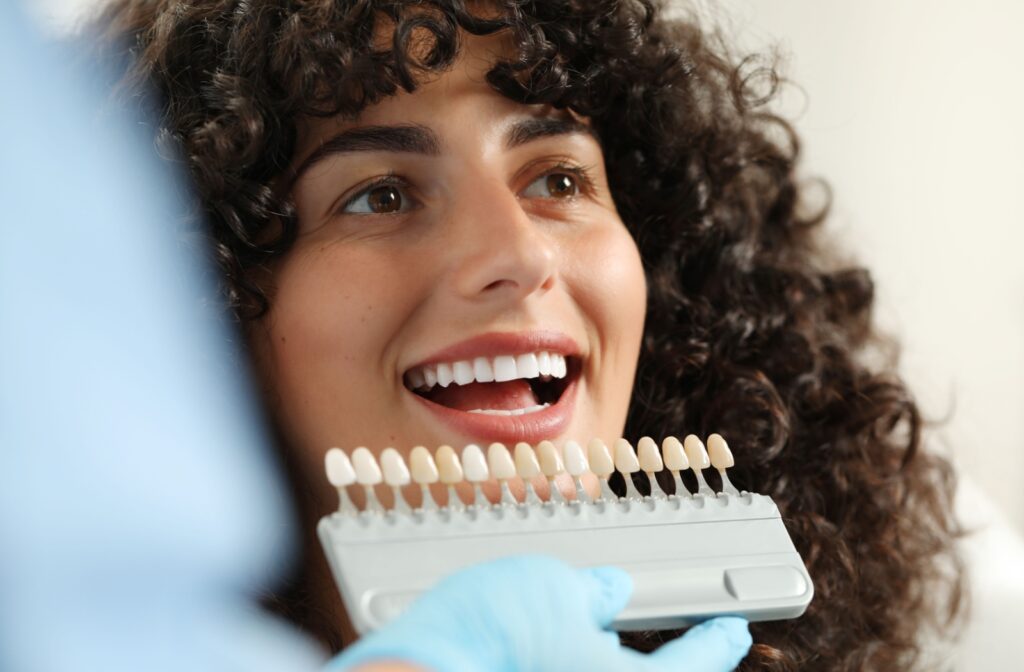
Veneers are a durable option for enhancing your smile. Porcelain veneers, in particular, can last for over 15 years when you take good care of them. This care includes regular brushing, flossing, and attending your routine dental checkups and cleanings.
Beyond the practical benefits, veneers offer a way to address things that may make you feel self-conscious. They can effectively cover chips, close gaps, and hide deep stains. For many people, the change in their smile can positively affect their lives.
If you’re ready to explore how veneers could work for you, our team at Happy Sapiens Dental is happy to answer your questions. Schedule a consultation to discuss your goals, receive a personalized treatment plan, and begin your journey to a confident, healthy smile.
Losing a tooth can affect your smile and confidence. When you explore your options with a team like the one at Happy Sapiens Dental, you may wonder which method of restoring your smile will fit with your lifestyle.
For many people, dental implants are a worthwhile choice because they provide a durable, natural-feeling solution that can last for decades with proper care. This guide explains the process, benefits, and key considerations to help you feel informed about your decision.
A dental implant is a small, sturdy post (usually made of titanium) that a dental professional places into your jawbone. Once it’s in place, it acts as a strong base for a new, natural-looking tooth, which is called a crown, mimicking the function of your natural tooth structure.
After the post is placed, it can naturally fuse with your jawbone over the next few months. This fusion creates a very strong foundation for your new tooth, mimicking the feel and function of one of your own.
Your new tooth is made of 3 key parts that work together to help restore your smile. These include:
Like any dental procedure, implants have both benefits and things to keep in mind. Comparing them to your other choices can help you make a decision that feels right for you and your smile.
Many people choose implants because they offer some clear advantages. Dental implants can:
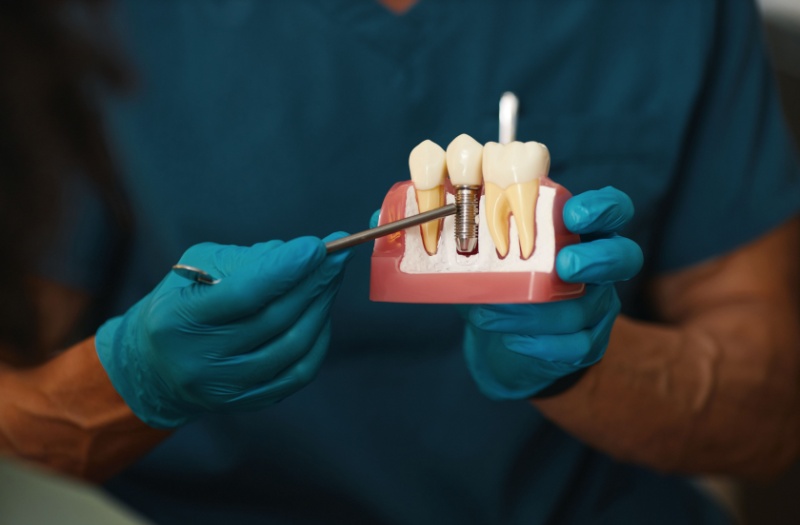
It’s also important to understand what the process involves. Before deciding on dental implants, you should know that:
The journey to a new tooth involves a few important steps. It’s natural to feel curious about what this process would involve, but we want you to know that our team’s top priority is making you feel comfortable and well-informed at every stage.
We don’t believe in a 1-size-fits-all process, which is why each implant is tailored to your specific needs. Our process may look something like this:
You don’t have to live with a visible gap in your smile while you heal. In many cases, the dental team can provide temporary options, like a temporary crown or a retainer, to maintain your appearance during this time.
One of the biggest advantages of dental implants is their durability. With proper care, they are a long-term solution for missing teeth and can last for decades.
Caring for your implant is usually straightforward and very similar to caring for your natural teeth.
The cost of dental implants is a common and important consideration. Because everyone’s needs are different, prices can vary. Our team is committed to transparent pricing and can discuss all the details with you so you know what to expect.
Several factors can influence the final cost of your treatment, including:
We believe that feeling confident about your smile should be for everyone, which is why we offer financing options.
A great way to begin your dental restoration journey is to have a conversation with a dental professional. Both our teams in Pinehurst and The Woodlands, Texas, can help you explore your options. Schedule a consultation to get a personalized path forward for restoring your smile.
Flossing is an essential part of a great oral health routine and a key part of maintaining your smile. But when you look in the mirror and see puffy or sore gums, it can be confusing, especially when you’re trying to do something good for your teeth by flossing.
This swelling is often a temporary response from your gums as they adjust to a new cleaning routine, react to your flossing technique, or begin healing from underlying inflammation. At Happy Sapiens Dental, we want you to understand your oral health, which is why we take the time to explain when this swelling is normal and when it might be time to get a professional opinion.
Puffiness or soreness in your gums after flossing can happen for a few reasons, especially if you’re just starting a new routine or adjusting your current one.
If you haven’t flossed regularly, your gums may be sensitive. It’s common for them to feel a little tender or swell slightly when you first start. Think of it like a new workout routine for your mouth: Your gums are getting used to the stimulation. This reaction usually lessens within 1–2 weeks as your gums get healthier and stronger with consistent daily brushing and flossing.
Sometimes, the issue is how you floss. If you are too rough or snap the floss down onto your gums, you can accidentally cause irritation and swelling. The goal is to use the proper flossing technique by gently curving the floss into a C-shape against each tooth and guiding it with a careful back-and-forth motion.
Swelling can also be a sign of gingivitis, an early stage of periodontal disease. This condition happens when sticky plaque full of bacteria builds up along your gumline. Your body responds to this bacteria by sending extra blood to the area, which can cause the gums to become inflamed and puffy.
When you floss, you disturb and remove that bacterial plaque. This can lead to temporary swelling and even a little bleeding as your gums start the healing process.
If you notice swelling is isolated to the gum around a single tooth, it might point to a specific issue. A few possibilities include:
While your gums adjust, you can take simple steps to find relief. These at-home remedies can reduce discomfort and inflammation, which can help make the transition to regular flossing more comfortable.
The amount of time it takes for swelling to go down depends on the cause. If it’s from starting a new flossing routine, most people typically see improvement within a week. If the swelling is from a minor injury, it may take a few days to heal. However, if the swelling continues for more than a week or gets worse, it’s a good idea to have it looked at by a dentist.
At-home care can resolve minor irritation, but some signs indicate it’s time for a professional checkup. Persistent gum issues may point to a deeper problem, and an early diagnosis often leads to simpler treatment. A consultation with a dentist can help identify the cause of your gum concerns, especially if symptoms suggest a potential dental emergency.
You should schedule an appointment if you experience any of the following:
At Happy Sapiens Dental, our entire team is focused on personalized, comfortable care to help make your visit as smooth as possible. We understand that some people feel uneasy coming to the dentist, and we want to provide a relaxing and positive experience. If you have concerns about your gums, we encourage you to schedule an appointment today.
You may want a straighter smile, but feel hesitant about traditional metal braces. Modern dentistry at Happy Sapiens Dental offers a discreet, effective way to align your teeth. Clear aligners can be a great option to help you achieve the smile you want while fitting into your lifestyle.
If you are looking for a way to straighten your teeth without the look and feel of metal brackets, the benefits of clear aligners could be just what you’re looking for.
Many people have concerns about the experience of wearing traditional braces. The appearance, feel, and maintenance can be a challenge for busy families and adults.
Metal brackets and wires are very noticeable, which might make you feel self-conscious. They can also rub against the inside of your cheeks and lips, causing irritation, especially right after an adjustment.
Traditional braces come with a list of foods to avoid, like popcorn, hard candy, and sticky snacks. It can also be tough to brush and floss around all the hardware, which creates places for plaque to hide.
Clear aligners have become a popular way to straighten teeth without the drawbacks of metal braces. They offer a comfortable and nearly invisible solution for both teens and adults.
Clear aligners use a series of custom-made, transparent trays that fit snugly over your teeth. Each set of trays applies gentle pressure to gradually shift your teeth into their correct positions. You switch to a new set of aligners about every 1–2 weeks as your smile progresses.
The process starts with a consultation where your dentist can create a 3D digital model of your teeth. From this model, your entire treatment is planned from start to finish. You receive your custom aligners and wear them throughout the day, only removing them to eat, drink, brush, and floss.
Clear aligners work for a wide range of mild to moderate orthodontic needs, but a professional evaluation is needed to confirm. Your lifestyle and the specific type of correction you need are important factors.
This treatment is effective for many common dental concerns. It works well for adults and teens with:
Adults and responsible teens are often good candidates because they can commit to wearing the aligners for the recommended 20 to 22 hours a day. Since the aligners are removable, they fit easily into any lifestyle—from school and sports to professional work environments. The American Association of Orthodontists offers helpful resources for adults considering orthodontic treatment.
You may see advertisements for mail-order aligners or other ways to straighten teeth from home. While these options might seem convenient, they come with some risks.
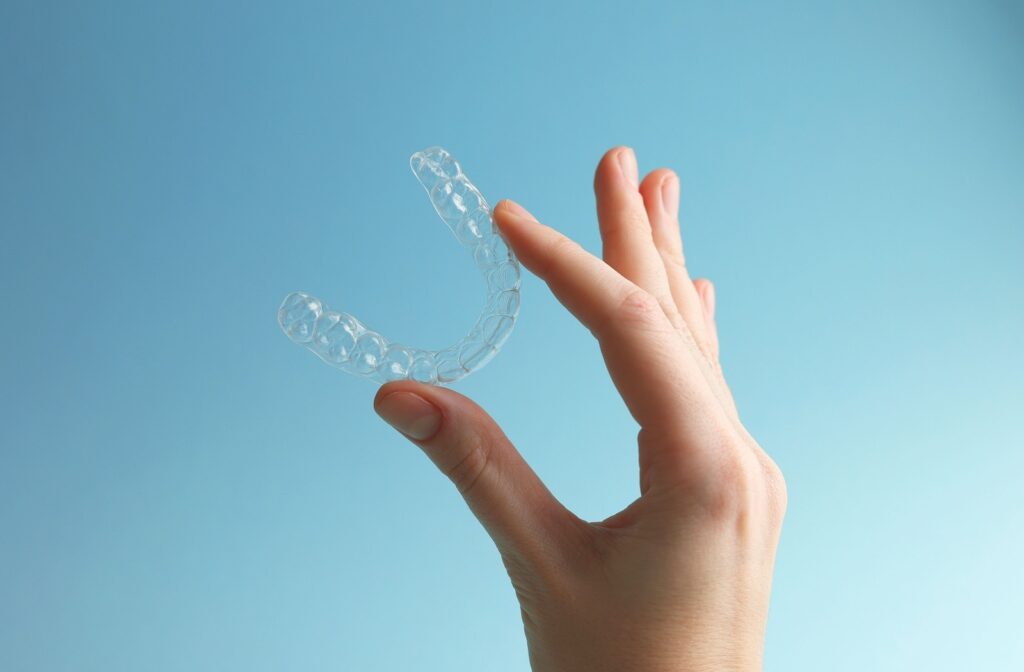
Without a dentist’s supervision, you could face unintended consequences like bite problems or even tooth damage. Moving teeth is a complex biological process that requires professional oversight. A professional assessment from your dentist confirms your teeth and gums are healthy enough for treatment.
DIY methods skip the important step of an in-person examination. A dentist can check for issues like cavities or gum disease that need to be addressed before your teeth can be moved safely. Professional oversight helps keep your treatment on track for a healthy, predictable result.
Taking the first step is simple. A conversation with a dental professional can help you understand your options and find the right path for your smile.
During a consultation, the dental team can examine your teeth, discuss your goals, and answer your questions. They can show you what your smile could look like after treatment and explain the process in detail.
The cost of clear aligners is often comparable to traditional braces, depending on the complexity of treatment. Though it’s always a good idea to check your specific coverage, many dental insurance plans cover a portion of the treatment. Practices may also offer flexible payment plans to help make your new smile more affordable.
The team at Happy Sapiens Dental is dedicated to providing you with personalized care to make your visits as comfortable as possible. If you are ready to explore how clear aligners can help you achieve a straighter smile, schedule a consultation to learn more about your options.

Taking the first step toward a new dental office can feel like a big task, especially when you’re coordinating care for your whole family. You want to find a place that feels welcoming and understands your needs. The process can seem complicated, but it doesn’t have to be.
Breaking the process down into a few easy actions that help you feel prepared and confident. Making your first dental appointment is a straightforward process of finding a local office, calling to schedule, and gathering a few key pieces of information.
The first step is to find a dental office that feels right for you and your family. A little research helps you choose a convenient and comfortable place for your dental care. This sets the foundation for a positive, long-term relationship.
Before you start your search, have your insurance card or policy number ready. You can look at your provider’s website for a list of in-network dentists. You can also call the dental office directly to ask if they accept your plan.
Many offices, like Happy Sapiens Dental, also provide information online about their payment methods and financing if you have questions about coverage.
Friends, family members, or neighbors can be a great source for suggestions. Ask them about their experiences and what they like about their dental office. These firsthand accounts can provide valuable insight, similar to reading online patient testimonials about your prospective dentist.
You can also search online for a dentist. Look for a website that is clear and helpful. It should answer your initial questions about services and the practice’s approach to family care.
Once you’ve chosen a dental office, it’s time to book your visit. Most offices offer a few different ways to book an appointment. This step is usually quick and easy.
Calling is a great option if you have specific questions you’d like to ask the front office team. If you’re ready to go, an online booking system can be a fast and convenient way to schedule.
When you call, just let them know you’re a new patient and would like to schedule your first comprehensive dental exam and cleaning. Be ready to provide some basic information, including:
It helps to have a few dates and times in mind that work for your schedule. Dental offices can be booked a few weeks out, so some flexibility can be helpful. This helps you find a time that fits your busy life.
Most dental offices operate by appointment only. This allows their team to give each patient dedicated time and attention. Scheduling ahead ensures that your dentist is ready for you, making your regular dental visits efficient and focused.
A little preparation can help your first appointment go smoothly. It also helps your dental team understand your needs from the very beginning.
Arrive 10 to 15 minutes early so you have plenty of time to fill out any necessary forms without feeling rushed. Have these items ready to bring with you to your visit:
Before your appointment, write down anything you want to ask. You might have questions about a tooth, your daily oral hygiene habits, or whatever else is on your mind. Having a list means you won’t forget what’s important to you. Your overall health and oral health are closely linked, and your questions and oral health concerns are important information for your new dental team.

Your first visit is all about the dental team getting to know you and your oral health. They’ll walk you through each step of the process with the goal of making you feel comfortable and informed.
You’ll likely start by filling out forms that cover your medical and dental history. This gives the dental team a complete picture of your health and helps them provide safe and effective care.
A dental assistant will likely take important digital x-rays of your mouth. Then, your dentist will conduct a thorough exam of your teeth, gums, and jaw. This also includes an oral cancer screening.
The dentist or hygienist will ask you questions to understand your needs. They might ask about any pain or tooth sensitivity, your brushing and flossing habits, and your general health. Your answers help them customize your care.
A hygienist will perform a professional cleaning and polishing to remove plaque and tartar. They can also offer tips for your at-home care routine. Sometimes, this is scheduled for a separate visit after the initial exam.
It’s very common to feel nervous about a dental visit—especially if it’s your first time or has been a while since your last visit. So don’t feel embarrassed if you’re a bit anxious. Letting the team know how you feel is the first step toward a more relaxed experience. Many offices offer options like sedation dentistry to help you feel at ease.
You can mention your feelings when you schedule the appointment or tell the team when you arrive. They can explain procedures, offer breaks, and work at a pace that is comfortable for you. Their goal is to help you feel safe and in control.
Before you leave, the team will make sure you have a clear plan for your oral health. You’ll know exactly what was found during your exam. You’ll also understand what comes next.
The dentist will sit down with you to discuss their findings. If you need any follow-up care—like a filling—your dentist will explain the options for restorative dentistry.
A coordinator will help you schedule any needed treatments and your next routine checkup, which is key for maintaining your dental health. They can also review costs and payment options with you. This makes it easy to stay on top of your dental health.
Your local dental office is your partner in maintaining a healthy smile for your whole family. Our team is here to answer questions and provide ongoing care to keep your family’s smiles bright.
Making that first appointment is a great step toward taking care of your family’s oral health. By following these simple steps, you can turn what seems like a daunting task into a smooth and positive experience. A little preparation goes a long way.
At Happy Sapiens Dental, we are dedicated to providing personalized care in a comfortable environment. We build trust by treating every individual with respect and understanding. Contact us today to schedule your family’s first visit.

Thinking about your family’s dental health can raise a lot of questions. You want them to receive quality dental care to keep their smiles bright, which often means preventing bigger problems before they arise.
The best way to avoid a root canal is through consistent oral hygiene, a balanced diet, and making sure to visit a dentist for regular check-ups. These simple habits help protect your teeth from the deep decay or injury that can lead to an infection.
By catching potential issues early, you and your dentist can work together to keep your teeth healthy.
When the soft tissue inside your tooth, called the pulp, becomes inflamed or infected, a root canal may be recommended. This procedure can repair and save a tooth that might otherwise need to be removed. It is often necessary in the case of deep cavities, a cracked tooth, or a tooth that has already undergone multiple procedures.
Your body often gives you signals when something isn’t right with a tooth. If you notice any of these signs, it’s a good idea to schedule a visit with your dentist. Paying attention to these symptoms can help you address problems early.
Good oral hygiene is your first line of defense against tooth infections. A consistent routine is simple to follow and very effective.
Brush your teeth at least twice a day with fluoride toothpaste. You should also clean between your teeth with floss once a day. This helps remove the plaque buildup that leads to cavities.
Foods and drinks high in sugar contribute to tooth decay. Try to limit snacks like candy and soda. Water is a great choice for hydration, as it helps rinse the mouth and often contains fluoride.
If you or your children play sports, always wear a custom sportsguard. This simple piece of equipment can protect teeth from chips, cracks, and other injuries. It’s an easy way to prevent serious dental problems.
Routine check-ups and cleanings are very important for your oral health. A regular visit to your dentist allows us to spot potential problems before they become serious. This proactive approach helps keep your smile healthy.
Putting off a recommended dental procedure can seem like an easy choice, but it often leads to more complex issues. An untreated infection will not go away on its own and can spread to your jaw or face. If you wait too long, the damage may become so severe that the tooth cannot be saved.
Sometimes, a tooth is too damaged to be saved. If you and your dentist decide that removing the tooth is the appropriate path, you do still have options. You can restore your smile and maintain your ability to chew.
An extraction is the complete removal of a tooth. We often also recommend replacing the missing tooth with a replacement. This prevents other teeth from shifting and keeps your bite aligned. Common options include:
Many people feel uneasy about root canals because of old stories they may have heard. Modern dentistry has made the procedure much more straightforward and comfortable. Let’s look at some common myths.
With our focus on comfortable dental treatment and modern anesthetics, a root canal should feel similar to getting a regular cavity filled. The treatment is designed to relieve the pain caused by an infected tooth. It is a solution to the pain, not a cause of it.
Saving your natural tooth is almost always the preferred option. Nothing looks, feels, or functions quite like your own tooth. Root canal treatment has a high success rate, and many restored teeth can last a long time with proper care.
There is no valid scientific evidence that links root canal treatment to diseases in other parts of the body. This claim is based on poorly designed research from nearly a century ago. Modern dental science confirms the safety of the procedure.
Taking simple, preventive steps is the best way to care for your family’s smiles and avoid the need for a root canal. Good daily habits, a mindful diet, and regular dental visits create a strong foundation for lifelong oral health.
At Happy Sapiens Dental, we’re dedicated to providing you with personalized care to make your visits as comfortable as possible. We focus on education and partnership to help you maintain a healthy smile.
Contact us today to schedule an appointment for your family.
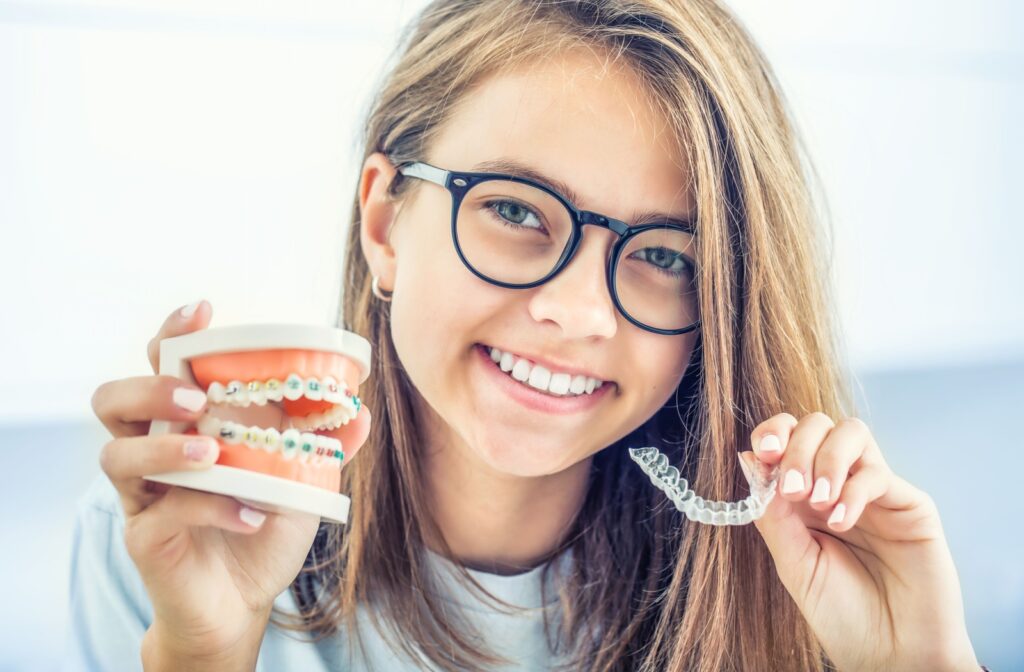
Choosing between Invisalign and traditional braces can feel overwhelming at first. Both options are effective, but they offer very different patient experiences overall. While braces have long been a trusted method for aligning teeth, Invisalign has become a popular alternative for patients looking for flexibility, comfort, and subtlety.
For many people, Invisalign is the way to go. It offers a discreet, convenient, and often faster way to achieve a straighter smile—especially for mild to moderate misalignment. However, the final choice ultimately depends on your dental needs, goals, and lifestyle.
Orthodontic care has come a long way in recent decades, and patients today can choose between several treatment options to align their teeth and improve their oral health and smile.
Traditional braces have been the gold standard for decades. They rely on a system of wires, brackets, and elastic bands to apply consistent pressure, slowly guiding teeth into the right position. They’re also fixed to your teeth and adjusted regularly by your orthodontist.
While highly effective, braces aren’t always the most comfortable or convenient solution. They can feel bulky, affect your speech, and make eating or brushing more challenging. For many people, the look and feel of braces can also be a barrier—especially for adults or teens who want a more discreet way to improve their smile. That’s where Invisalign comes in.
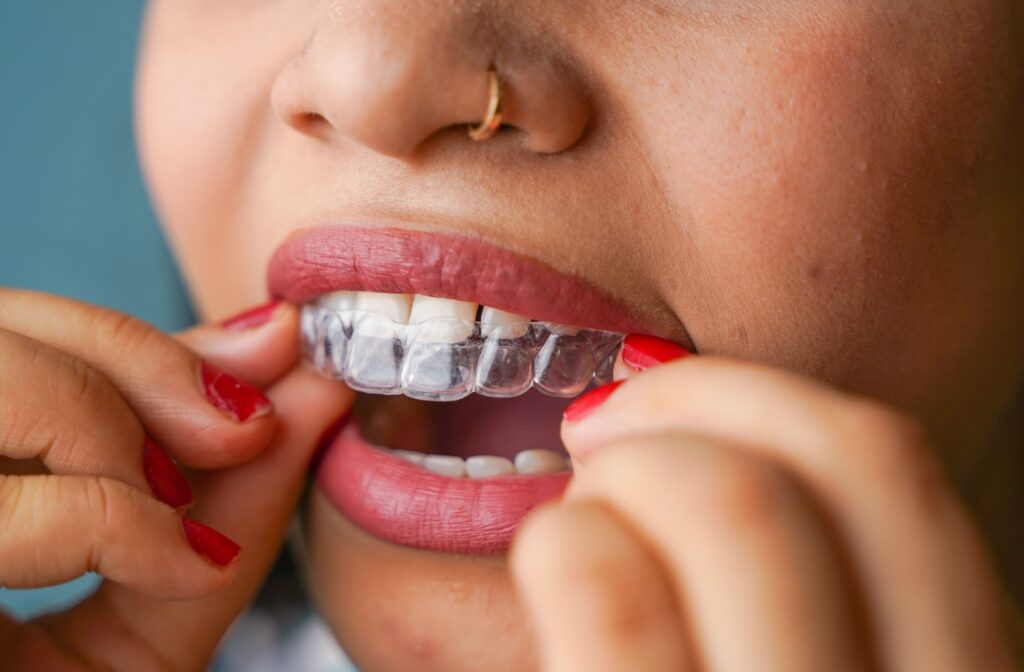
Invisalign offers a modern, flexible approach to orthodontics. Instead of wires and brackets, Invisalign uses a series of custom-designed, clear aligners that fit snugly over your teeth. These aligners are nearly invisible, plus they’re removable to boot.
Each aligner is worn for about one to two weeks before switching to the next set in the series. Over time, these aligners apply gentle, controlled pressure to gradually shift your teeth into their ideal alignment.
Invisalign can help address a wide range of issues, including:
Because the aligners are removable, you won’t need to change how you brush, floss, or eat. Simply take them out during meals and when it’s time to clean your teeth. This ease of use is one of the biggest reasons patients choose Invisalign over traditional braces.
The Invisalign journey starts with a consultation, where your dentist will assess your teeth, take digital impressions, and create a 3D treatment plan to map out each stage of your smile’s transformation.
Once your aligners are ready, you’ll begin wearing them for at least 22 hours a day. Removing them only to eat, drink (anything other than water), and clean your teeth helps keep your treatment on track. You’ll receive new sets of aligners throughout your treatment, with check-in appointments every few weeks.
These visits allow your dentist to monitor progress, answer questions, and make adjustments if needed.
Most patients complete treatment in 6 to 18 months. That said, your timeline may vary based on:
Patients who follow their dentist’s instructions closely and wear their aligners as recommended often start noticing results within a few weeks. By the time you reach the final set of trays, your smile should feel—and look—remarkably different.
There are several reasons patients choose Invisalign:
While braces may still be the recommended option for certain complex cases, Invisalign offers a versatile and appealing alternative for many patients.
Both Invisalign and braces can help you achieve a healthier, more confident smile—but the right choice depends on your needs, goals, and lifestyle. Invisalign offers comfort, convenience, and a subtle appearance, while braces remain a powerful option for more complex alignment issues.
If you’re ready to explore your options, our team at Happy Sapiens Dental is here to guide you. Book your appointment today and take the first step toward a straighter, more confident you—we’re excited to be part of your journey.
We all know life gets busy. When you’re juggling work, family, and everything else, it’s easy for dental checkups to fall off the radar. But skipping routine care doesn’t mean nothing is happening in your mouth. Dental issues can develop slowly and can be hard to detect on your own.
In general, adults should visit the dentist every 6 to 12 months. These visits aren’t just about clean teeth—they help protect your long-term oral and overall health, giving your dental team a chance to catch concerns early.
Dental visits do more than just clean your teeth. They provide preventive care that helps reduce the risk of you developing serious oral health problems down the line. At each visit, your dental team checks for:
These exams can also detect signs of health conditions that show up in the mouth first. For example, unmanaged gum inflammation has been linked to systemic health problems like heart disease and diabetes.
And while it might feel like you’re doing fine without a visit, small issues can be hard to notice on your own. Pain often shows up late in the game—after the damage has progressed.
For most people, waiting longer than 12 months between visits increases the risk of complications. Even if you don’t have symptoms, there may be issues developing under the surface that only your dentist can spot.
Some dental problems take time to cause pain or become visible. For example, gum disease can progress from gingivitis to periodontitis with little or no discomfort in the early stages. Cavities can also begin to form between teeth or beneath old fillings without being felt at all.
Routine cleanings remove hardened plaque (tartar), which can’t be brushed away at home. Skipping regular appointments means letting buildup accumulate which can lead to inflammation and infection over time.
If it’s been more than a year since your last checkup, you’re due. If it’s been longer than two years, you could be missing key warning signs.
You may have had a recent cleaning, but that doesn’t always mean you’re in the clear until your next one. Symptoms can pop up unexpectedly and may indicate a deeper issue.
Call your dental team if you notice:
These signs can indicate anything from minor gum inflammation to a serious infection or abscess. Catching them early can help prevent further damage or the need for more complex treatment.
In general, adults should schedule a dental checkup and cleaning every 6 months. However, some people with excellent oral hygiene and low risk for cavities or gum disease may be able to go up to 12 months between visits.
Those who may need more frequent visits include:
Your dentist will help determine the right interval based on your specific health history and oral condition.
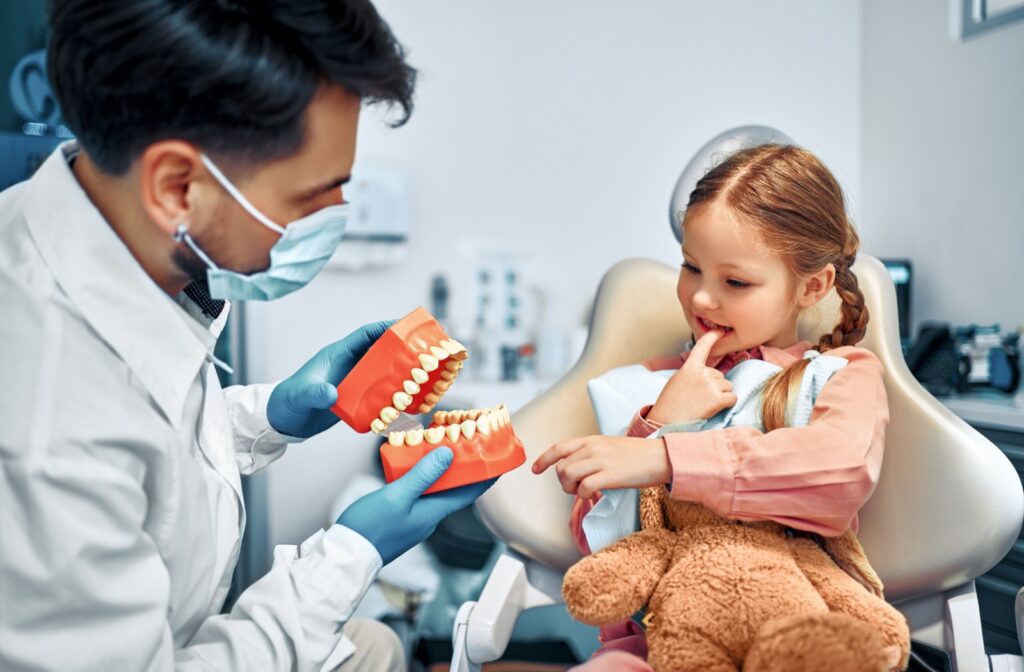
Children should visit the dentist by their first birthday or within six months of their first tooth erupting. After that, dental visits every 6 months help maintain healthy development through childhood and adolescence.
These appointments help:
To help young patients adjust, dentists may use a gradual approach that keeps the environment friendly and stress-free. A positive experience early on can set the stage for healthy lifelong habits.
If it’s been a while since your last dental visit, don’t stress. It’s never too late to prioritize your oral health. Whether you’re due for a cleaning, have a question about symptoms, or just want to check in, a comprehensive exam can offer peace of mind and a clear next step.
Book your next appointment with Happy Sapiens Dental and take that first step toward a confident, healthy smile!
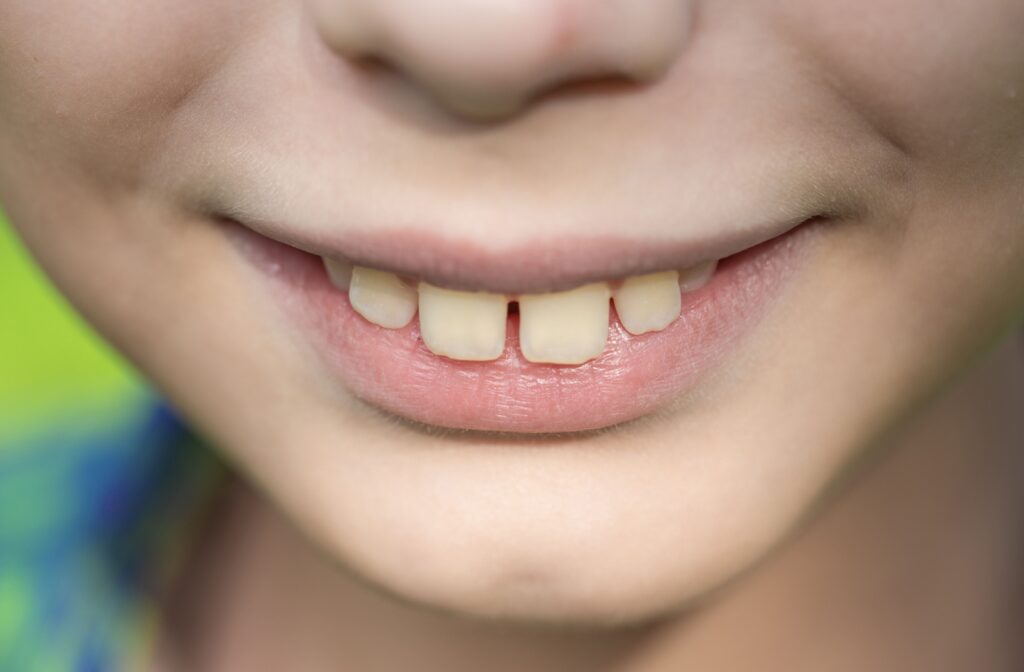
An overbite is one of the most common reasons patients seek orthodontic care, and it’s often more than just a cosmetic concern. While a small overbite is normal, a deep or severe overbite can cause a range of dental and health problems over time. The good news? In most cases, braces can effectively fix an overbite and improve both your smile and overall oral health.
An overbite occurs when the upper front teeth extend too far over the lower front teeth. Dentists often refer to this condition as a type of malocclusion, or misaligned bite. Overbites can be:
Overbites may be classified further as:
Several factors can contribute to the development of an overbite, including:
An untreated overbite isn’t just an aesthetic concern—it can also impact your quality of life. Potential complications include:
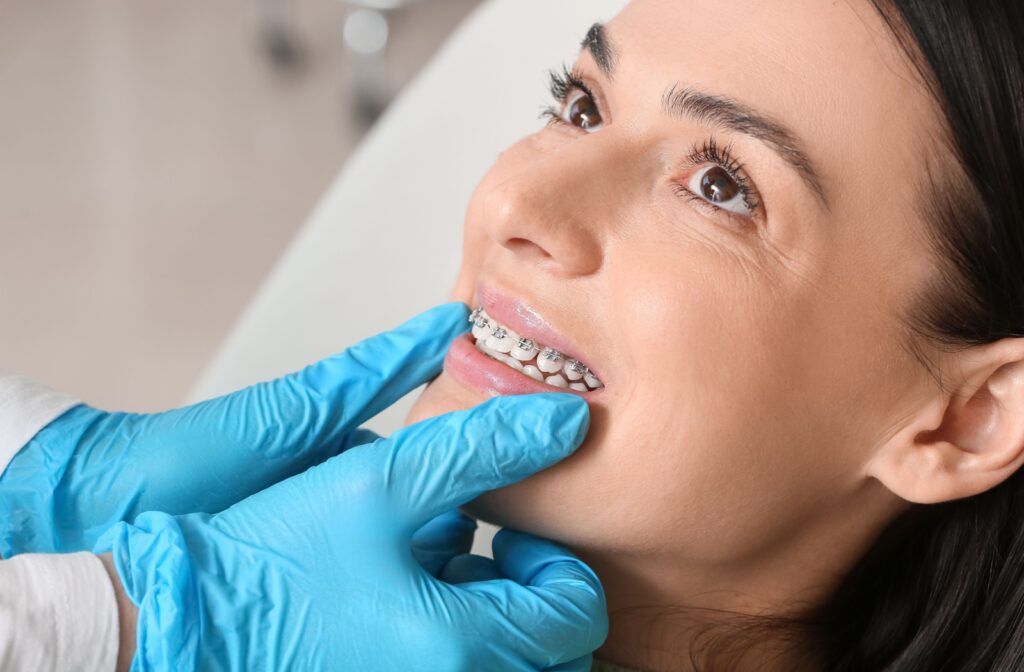
Braces work in stages to gradually shift your teeth and jaw into proper alignment:
Elastics play a crucial role in fixing overbites. They’re typically worn from upper to lower brackets, creating continuous pressure that gradually repositions the jaw. For optimal results, patients should wear their bands as instructed—usually all day, except when eating or brushing.
The length of treatment depends on how severe the overbite is and whether other issues like crooked teeth or crowding are present. In general:
In many cases, yes—but not always.
Your orthodontist will assess your unique needs with the help of X-rays, 3D scans, and bite analysis before recommending a personalized treatment plan.
When it comes to overbites, early diagnosis and treatment can prevent more serious problems down the road. Children as young as 7 may benefit from early orthodontic evaluation. Treatments may include:
The earlier treatment begins, the more likely it is to prevent the need for extractions or jaw surgery later in life.
Correcting an overbite has a number of benefits:
For children, it can also mean less teasing at school and better overall emotional well-being.
If you or your child has an overbite, it’s important not to delay treatment. Whether the issue is mild or more severe, early evaluation and a custom orthodontic plan can make a huge difference in long-term dental health and comfort.
At Happy Sapiens Dental, we specialize in personalized orthodontic care and are here to guide you every step of the way. Contact us today to schedule your consultation and take the first step toward a healthier, more balanced smile.