Skip to content
Our promiseCare you can trust
Modern, Trusted DentistryHonest Advice. Your Best InterestConfidence in Your SmileClear Pricing. No Surprises

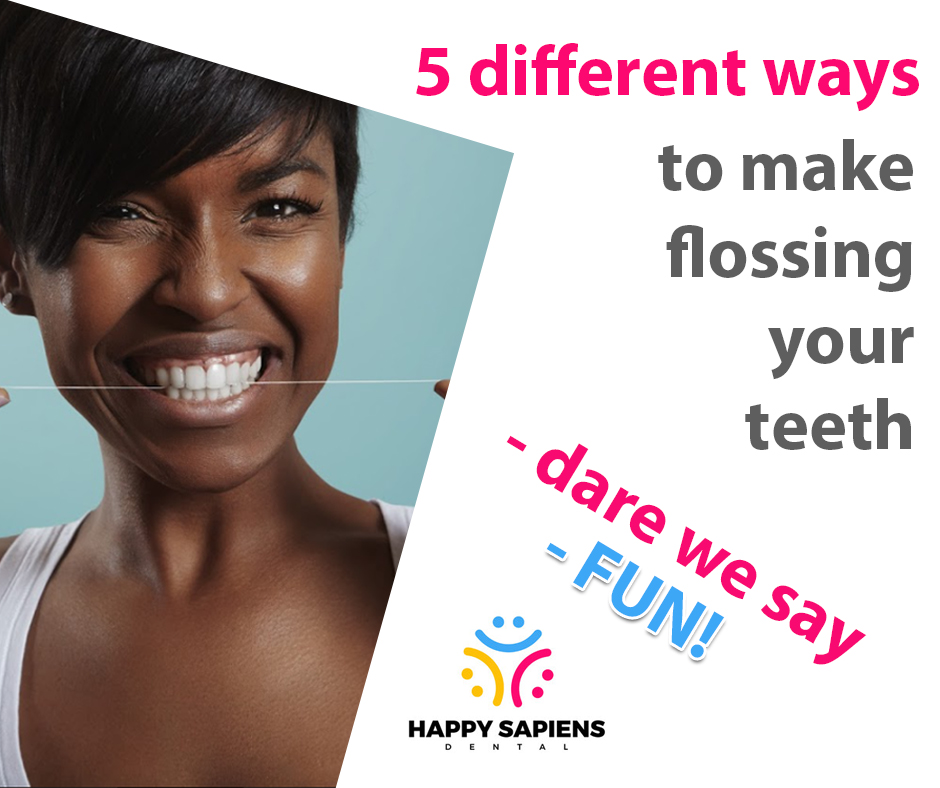
5 different ways to make flossing your teeth – dare we say – FUN!

Why flossing is important…

We’ve all been told it’s important to floss our teeth but did you know there are 5 different ways to make flossing your teeth – dare we say – FUN!

It’s true! In fact, there are 5 different ways to floss! And that’s GREAT NEWS! Why? Because most patients that don’t floss regularly say the #1 excuse for not flossing regularly is that “they don’t enjoy doing it” even though they know that it really helps keep their mouth healthy.
I’m sure you already know that flossing keeps your teeth clean. But did you know that flossing protects your gums as well? As you eat, food ends up lodged between your teeth and gums. Left there, it becomes plaque – that gooey white residue that looks horrible and makes your teeth feel fuzzy (I hate that feeling). Fortunately, you can remove plaque easily with floss. The bad thing though, is if you don’t use floss to remove it, that plaque can harden and become tartar. As you might suspect, tartar is even worse than plaque because only your dental hygienist or dentist can remove it with a metal pick or scraper. (As a result, gum disease can infect your jaw if you don’t get the tartar removed!)

So now you know why you need to floss! But what can you do to make it more enjoyable? Why not try one of these 5 methods of flossing? Because I’m betting you’ll find at least one of them is actually…dare I say it…FUN! And even if you don’t find it fun, flossing occasionally is still better than never flossing at all.

Your 5 different ways to make flossing your teeth – dare we say – FUN!

  1. Good “old fashioned” dental floss: When I was a kid (yes, we’re talking DECADES ago…), Mom gave us chunks of woven dental floss to wrap around our fingers and floss between all our teeth. Still effective, woven floss does a great job of removing plaque. Need the floss to slide easier? Try waxed floss. But if you want the ULTIMATE in floss, try some of the new FLAVORED flosses! You may have tried cinnamon or mint already but did you know you can get cupcake or bacon-flavored floss?!?
  2. Floss Picks: Think of a floss pick as a plastic floss holder that replaces your fingers. The floss pick has floss at one end and a toothpick at the other. With a floss pick you don’t have to put your fingers in your mouth since the floss handle stays outside your mouth. Floss picks are economical and often come in packs of 20 or more. Best of all, they’re small and discreet making them ideal for use at home, work, school, or between meals!
  3. Interdental brushes: Not at all like a typical toothbrush, interdental brushes are much smaller and often look like a toothpick with bristles. Available in a wide range of sizes, interdental brushes are your best choice for effectiveness and versatility especially for anyone wearing braces. Like floss picks, disposable interdental brushes are great to keep with you and use throughout the day!
  4. Water flossers: Have you heard of WaterPik? Although a brand name, “water pick” is how most people refer to a “water flosser”. Water flossers come corded or un-corded and utilize a small stream of water to clean between your teeth. You’ll feel just like you had your mouth jet-rinsed by the hygienist after a cleaning! Best of all, many find it easier and more comfortable than traditional flossing. Although some may question its overall effectiveness, water flossing can be great for gentle gum care and for reaching below the gum line. They’ll be more expensive than the other tools we’ve covered here, but they’re a worthwhile investment to get yourself into the habit of flossing.
  5. Air Floss: A more recent invention, air flossing uses a stream of air and tiny water droplets to remove plaque. These tools are very similar to water flossers, although they’re typically more expensive. Still, they can be a great investment for anyone who loves cool tech gadgets.

The choice is yours!

Ultimately, how you choose to floss is up to you. There’s no question that flossing improves your oral health. So choose your favorite and give flossing a whirl! Let us know which of the 5 different ways to make flossing your teeth – dare we say – FUN! you choose!

Need some assistance getting your technique correct or deciding on the best flossing method? Give us a call at (281) 367-3685 or request an appointment online with Happy Sapiens.
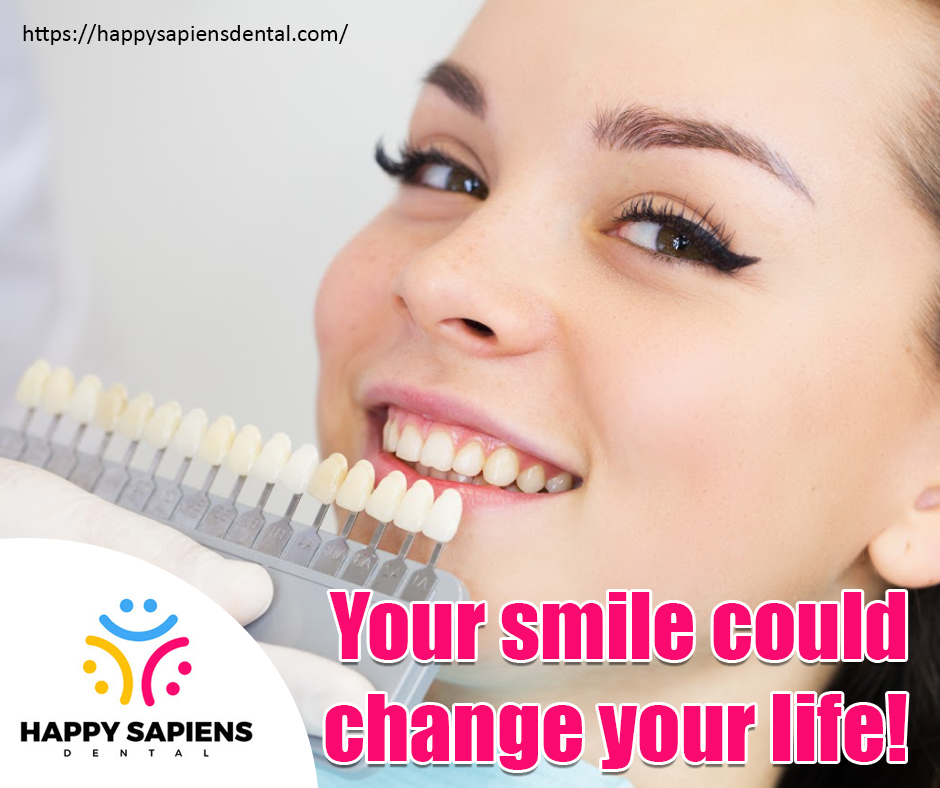
Your smile could change your life!

Smiling makes you seem courteous, sociable, and qualified. If you look unhappy, uneasy or anxious, maybe even in a bad mood; other people doubt if they want to be around you.

A bright smile may seem a simple thing, but it could lead you to success because in business, it gives colleagues certainty that you are confident with what you are doing!

You might also be amazed to learn that how big you smile can predict your life span. A 2010 Wayne State University research project studied pre-1950s major league player baseball cards. According to Ron Gutman, author of Smile: The Astonishing Powers of a Simple Act, The researchers found that the span of a player’s smile could actually predict the span of his life.

Players who didn’t smile for their baseball card pictures lived an average of only 72.9 years, whereas players with beaming smiles lived an average of almost 80 years. Must be the endorphin rush that keeps you going longer!

Smiling can make you happy, and it leads the people around you to smile as well. Buddhist author Thich Nhat Hanh said, “Sometimes your joy is the source of your smile, but sometimes your smile can be the source of your joy.”

Welcome to the world of cosmetic dentistry!

While traditional dentistry addresses the health of your teeth and gums, cosmetic dentistry focuses on the appearance of your teeth, mouth, and smile.

Cosmetic dentistry has been around for decades, but the materials used today are more hard-wearing and much more natural looking than those used in the past.

Ways to fix your smile via Cosmetic Dentistry

  1. Dental Crowns: Crowns, aka as caps, are custom made to fit over your existing tooth after it has been prepared to accept the cap. For aesthetic purposes, crowns are usually made from ceramic, porcelain, or porcelain fused to metal. Crowns are used in cosmetic dentistry to cover teeth that are broken or chipped, have large fillings, are unusually shaped, or to cover gaps in between teeth.
  2. Veneers: This is a technique that can be used to repair or improve the look of a tooth that has been badly stained, broken or chipped, or is mildly crooked. These are made from a thin piece of porcelain or other material and cemented to your tooth.
  3. Orthodontic Treatments: Orthodontics is not just for children anymore. Many adults are seeking treatment from orthodontists for cosmetic purposes. Progress in techniques for straightening teeth include braces that actually hide the fact you are having orthodontic work done!
  4. Tooth Bonding: Bonding is the process in which tooth-colored material made of composite resin placed on the tooth then shaped to fit and hardened with a special light. This can be used as an economical method to repair and improve the appearance of a tooth that has been stained, broken or chipped and even fill in gaps.
  5. Teeth Whitening: Sometimes the simplest thing will be the most effective at giving you the bright smile you deserve. There are several methods available: surface abrasives (often found in toothpaste), bleaching and bleaching with laser or light. Not everyone is a suitable candidate for any or all of these procedures. Thin enamel, sensitive teeth or gums, or other oral issues may mean whitening will cause more harm than good. Always check with your dentist before whitening your teeth at home.

We would love to be your choice to bring out the radiant smile you’ve been looking for.

Call us at (281) 367-3685 in Woodlands , (281) 356-3351 in Pinehurst or CLICK HERE to schedule an appointment.

Common Oral Infections

You need to take proper care of your oral health. Improper hygiene, vices, and physical contact are just some of the causes of the infections that can occur within the mouth. Being aware of what’s going on with your mouth is one of the most important things to know. Tooth decay:

Also called dental carries or cavities. Imagine your teeth are disintegrating due to acids that are caused by bacteria. If you are experiencing pain while eating, or you notice pits on the tooth surface, the chances are you already have tooth decay. It may still be reversible if you catch it is time. Regular flossing and brushing along with dental cleanings and checkups can help prevent getting cavities.

Gingivitis:

This is the baby brother of periodontitis, and if you let this one slide, you’re going to probably going to regret it. Gingivitis is caused by plaque that becomes attached to your tooth surfaces. Regularly going to your dentist for a cleaning is important as they will remove the plaque for you. Better yet is practicing good oral hygiene, especially being sure to floss to make sure the areas your brush can’t reach get properly cleaned. Don’t ignore gingivitis as it could cause your teeth to fall out in the future. Five minutes a day is worth the investment for your health.

Gum Disease:

a.k.a. periodontal disease, this one makes your gums more inflamed than gingivitis and affects the tissue around your teeth. The tissue pulls away from the tooth leaving pockets where particles can get trapped, causing an infection. If you have ignored your gingivitis before, you’ll need to be sure to visit your dentist immediately.

Cold Sores:

a.k.a. oral herpes is a viral infection caused by the herpes simplex virus. There are names for every herpes infection that occur in your body. Oral herpes is a very visible infection that occurs on your face or in your mouth. If your lip starts itching or maybe you already have fever blisters, chances are good this is a cold sore. Cold sores may take two to four weeks to disappear. While the cold sore is present, you’ll probably feel pinching-like pain in the affected area. Herpes will usually let itself show for a period of time with some active cases, but it will also decrease depending on severity. There are medicated creams that can help speed the process of healing the outbreak. Herpes is not limited to cold sores so watch out for unexplained fever, swollen lymph nodes, muscle pain, and headaches as the first symptoms to be concerned about.

Taking care of your oral health is simple and easy. Brush after meals and before bed and floss once or twice a day. There are many electric toothbrushes that can help make this a light task. There are also many aids to make flossing less of a bother as well.

Having bad oral health is not something to be proud of and can cause far-reaching health issues. Start to change this pattern now, Call us at (281) 367-3685 in Woodlands , (281) 356-3351 in Pinehurst or CLICK HERE to schedule an appointment.

Have more questions or would like to schedule an appointment? CLICK HERE or Call Us at (281) 367-3685

Give your Jaw Joints a Break: Quick and Simple Jaw Exercises for TMJ

Give your Jaw Joints a Break: Quick and Simple Jaw Exercises for TMJ

When you hear Temporomandibular joints, what comes into your mind? Most people would doze off. Others will ask you to repeat the words. But in rare cases, a few individuals know what TMJs are. But for the sake of everyone, let’s dive deep into the things you need to know about the unsung heroes of your jaws.

Temporomandibular joints are a unique cluster of tissues, nerves, muscles, bones, and cartilage, which connect your jawbone to your skull. Whenever you eat or speak (basically any movement that concerns the mouth and jaw), your TMJ is responsible for jaw movement–especially chewing.

The bane of temporomandibular joint disorder

Most people often dismiss the pain they’ve been feeling in their jaw joints. Despite this unhealthy habit, they can’t be blamed. Symptoms of TMD are relatively common and rarely causes any severe concern in the hopes of getting better over time. Neck, facial, and ear pain, headaches, difficulty when biting, clicking of jaws, popping sounds when biting are among the banner signs of the disorder.

A few minutes of your time

Considering TMD’s risk factors, they’re a high price to pay compared to how easy it is to prevent them. Recent studies show how stress affects your temporomandibular joints. It takes awhile to notice, but your jaw joint’s muscular activity spike up when you’re on edge.

Try these easy techniques to help your TMJs recuperate:

Inhale and exhale. Simple as it is, breathing exercises can do wonders in elevating your mood and reducing your stress levels. Let your chest expand and exhale slowly through the nose about the same amount of time as you inhaled for. Repeat this process at least five times.

Rocobado’s 6 x 6 Exercise. A six-pronged routine is well known for its effectiveness in relieving TMJ pain – this aids in restoring regular joint activity and mobility. Doing these exercises for six repetitions helps your soft tissue memory to help your jaws relax.

  • Resting position of the tongue – Let your tongue touch your upper palate while applying gentle pressure.
  • TMJ rotation – Gently open and close your jaws in while your tongue presses your palate.
  • Rhythmic Stabilization – Let your tongue remain on your upper palate. Place two fingers on your chin, use them to push your mouth open using gentle resistance.
  • Axial neck extension – Put your hands behind your neck and move your chin up and down as if you’re nodding.
  • Shoulder posture correction – Squeeze the shoulder blades tightly while lifting your chest upward.
  • Stabilized head flections – Gently move your chin towards your neck and push it out afterward.

Strengthening Exercises – Upon experiencing pain, try placing your thumb under your chin while pushing your chin against it. Open your mouth against the force and hold it open for at least five seconds. You can also open your mouth as wide as you can while pushing your index finger between your chin and lower lip. Close your mouth while resisting the force exerted by your fingers.

Final Thoughts

These three routines are among all the many exercises you can do in your spare time. Make sure to consult your dentist and physical therapist. The road to recovery can only be clear if you’ve got health experts guiding your way. Your family dentist may also advise you use night guards to prevent clenching and grinding. They can also recommend alternative brushing and teeth cleaning steps when oral hygiene becomes painful caused by jaw pain.

If you have any questions regarding TMJ/TMDCall us at (281) 367-3685 in Woodlands , (281) 356-3351 in Pinehurst or CLICK HERE to schedule an appointment.

Have more questions or would like to schedule an appointment? CLICK HERE or Call Us at (281) 367-3685

Should You Have To Visit A Dentist?

What Happens During A Dental Visit?

The mouth is the most vulnerable part of our body, and it requires thorough care and maintenance. An estimated 4 billion people are affected with oral conditions due to improper oral hygiene and other diseases affecting the oral health. Not brushing the teeth, over consumption of food, especially those with high sugar levels can ruin the teeth’s integrity, which will soon lead to complete damage. Poor oral hygiene results in oral conditions such as bad breath, cavities, bruxism, mouth sores, and others.

A regular dental visit is categorized into two parts, the cleaning, and examination. During the appointment, your dental hygienist will perform a thorough check-up through gums, and there will also be an examination for the mouth to monitor if there are signs of an existing oral cancer or diabetes. They will also clean your teeth, especially the space between the gums and teeth that your toothbrush can’t clean thoroughly. They may take x-rays to see if there are any cavities or misalignment of the teeth or jawbones.

Most people think that dentists will only examine the mouth, which is incorrect. In fact, dentists also include the head and neck as part of the evaluation process. These particular parts can help them support their findings to come up with a precise result.

Following the examination, the doctor will probably make some recommendations about how you brush or floss, habits you may have or suggestions about needed work, like braces. You would be wise to follow them to keep having a healthy, happy smile.

If you’d like to book a Dental exam Call us at (281) 367-3685 in Woodlands , (281) 356-3351 in Pinehurst or CLICK HERE to schedule an appointment.

Why are Dental X-Rays Such a Big Deal?

Dental X-rays are diagnostic tools

As the age-old cliche goes, there’s more than meets the eye. And there are plenty of things your dentist should see inside your mouth. Radiography or dental x-rays are a vital aspect of evaluating your oral health. Your dentists need an in-depth picture of your teeth and bones to help you maintain your picture-perfect smile for everyone to see.

If it’s your first time to go through any dental procedure, your dentist will need a proper visualization of your dental health. After this process, you’ll know if you have any presence of abscesses and other types of masses in your teeth. For adolescents, dental x-rays are vital in checking for impacted wisdom teeth and decay.

On the other hand, it’s best to let your dentist closely monitor the status and position of your children’s baby teeth. When permanent teeth start to grow beneath your children’s existing primary teeth, complications may begin to arise. These include the lack of room for permanent teeth, gaps, and your teeth not lining up when you close your mouth.

Dental X-rays are preventive measures

Your teeth are not just what you see when you look in the mirror. They’re composed of enamel, dentin, cementum and pulp (which contains the nerves, blood vessels and connective tissue). Cavities and tooth decay can spread deep within your dentin eventually infecting your pulp. When this happens, you’ll feel excruciating pain and swelling caused by inflammation. Dentists use dental x-rays to detect early signs of cavity damage and well-hidden signs of tooth decay.

Dental x-rays are also used to detect gum problems. When symptoms are diagnosed during the early stages, you’ll have a better chance of saving your precious teeth from costly treatments. Many dental issues can be fixed with proper oral hygiene when caught early enough

Risk of not getting dental x-rays

Just like any part of your skeletal system, your teeth and jaws are partly bones. Imagine not letting your doctor or surgeon give you a comprehensive x-ray of the area before setting a broken bone? Same goes with your teeth–regardless if there’s a damage or not, an accurate visualization allows your dentist to get a clear picture–literally.

If you frequent your dentist, you’ll get your dental radiography one way or another. Think about this. Two-thirds of your tooth is under your gum tissue. Only your dentist can know what’s happening beneath your gum line–and the sole path towards this is paved by dental x-rays.

In conclusion

Your teeth are both vulnerable and unpredictable. Relying on how they are progressing from checking a mirror is a dangerous habit and frankly, can be a costly one, too. Dental x-rays examine your tooth from top to bottom. When you get a dentist to see the nooks and crannies of your teeth, they can take care of any issues earlier, so it’s going to cost you less than if you had waited.

In a nutshell, dental x-rays give your teeth all the attention they need. Aside from low levels of radiation, there’s not really a downside to dental radiography. Even then, radiation exposure can be avoided through appropriate equipment and procedure protocols. Pregnant women are exceptions, though.

When it comes to your teeth, ignorance will never be a cause of bliss. Book your next dentist appointment now and discover what your teeth have been hiding from you!

Call us at (281) 367-3685 in Woodlands , (281) 356-3351 in Pinehurst or CLICK HERE to schedule an appointment.

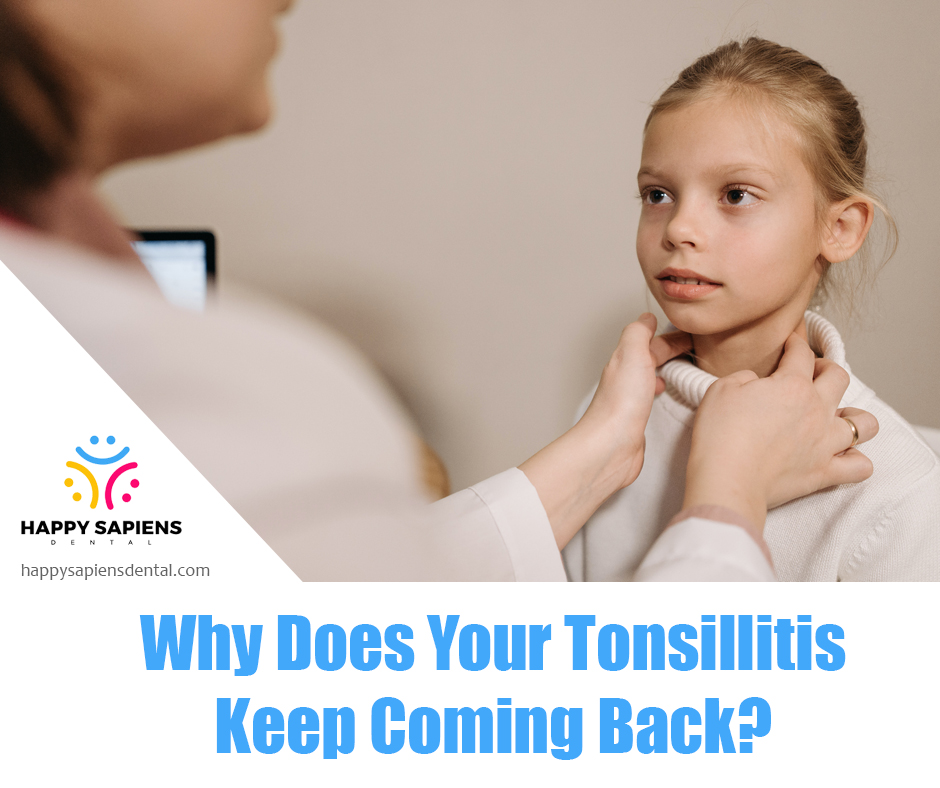
Why Does Your Tonsillitis Keep Coming Back?

Watch Out for Patient Zero

The worst thing about tonsillitis is how it can come back to haunt you. Just as you thought you’re out of the woods, you suddenly feel a recognizable sting inside your throat. You’re having difficulties in swallowing again. At first, you dismiss the thought and remain in denial. You’ve probably told yourself, I just got past this. There’s no way I’m getting it again.

The worst thing about tonsillitis is how it can come back to haunt you. Just as you thought you’re out of the woods, you suddenly feel a recognizable sting inside your throat. You’re having difficulties in swallowing again. At first, you dismiss the thought and remain in denial. You’ve probably told yourself, I just got past this. There’s no way I’m getting it again.

After reaffirming yourself, your tonsillitis won’t come back, and you suddenly feel the chill. You become lethargic, and you’re once again in the pangs of annoyingly familiar symptoms. You rush to the mirror, open your mouth, and alas pus-filled tonsils greet you good morning.

Where did you go wrong? Read on to retrace your steps.

You’re already aware that tonsillitis is caused by bacteria and germs which are mostly not common as compared to your mouth’s natural microflora. Once these foreign invaders become too comfortable, the tonsils, the first barriers of defense in your mouth, produce white blood cells to fight off infection. Since pathogens cause the illness, it’s necessary to isolate yourself or your patients who can develop a potential contagion. Sharing personal items, toiletries especially toothbrushes, is a big no-no.

Aside from person-to-person contact, it’s worth noting how tonsillitis-causing viruses and bacteria can be transmitted either through airborne droplets released during coughing or sneezing. These droplets can latch on to surfaces. Make sure your utensils and personal items are far away from people with a contagious type of tonsillitis.

Don’t worry, patients with tonsillitis are considered non-contagious after 24 to 48 hours of their doctor-prescribed antibiotic regime.

Skip the Stick

If you’re a heavy smoker, expect recurrent tonsillitis and a whole bunch of trouble for your tonsils. Tobacco smoking has impactful effects on your health, especially for lymphoid tissues such as your tonsils.

Nicotine, along with all the harmful chemicals present inside a cigarette stick aggravates all the three types of tonsils in your body namely, the adenoids (located behind the nose), lingual (located at the back of your tongue), and pharyngeal tonsils (situated at the sides of your throat). When you inhale and exhale tobacco smoke, all of these tissues take the beating.

Ultimately, smoking attacks your immune system making you more vulnerable to infections. Yes, even chronic and persistent tonsillitis.

How’s Your Oral Hygiene?

With good dental care and hygiene, tonsillitis-causing bacteria have less chance of causing problems. Go beyond merely brushing your teeth. Floss at least once a day and always rinse with dentist-prescribed mouthwash to kill stubborn bacteria.

Having stellar oral-care habits makes your mouth less hospitable to bacteria. Be sure to gently brush your teeth, tongue, cheeks, and gums using a soft-bristled brush. Also, try using antibacterial toothpaste get rid of cavities and plaque build-ups where microbes like to seek refuge in.

Antibiotics

Not following your prescribed antibiotic regime has long-standing effects which pose a significant threat to your tonsils. If you’ve been diagnosed with bacteria-caused tonsillitis, staying faithful to your medication is an absolute must. When you fail to do so, bacteria in your body develop a resistance. When they come back to plague your tonsils, they’ll surely pack more punch.

Closing

The truth is, your tonsils job of safeguarding you from infections is a lot harder than it looks. Other patients have it harder, though. Their tonsillitis sometimes develops to ear infections, scarlet and rheumatic fever.

Needless to say, tonsillitis is already a handful. You don’t have to experience the same pain and trouble again. Upon reading all the preceding precautions, which are you most guilty of ignoring?

Call us at (281) 367-3685 in Woodlands , (281) 356-3351 in Pinehurst or CLICK HERE to schedule an appointment.

The underrated doctors of the medical world: DENTISTS

People mocking dentists for their profession is exasperating. Why would they even dare to mock someone who’s helping other people with their medical issues? Your oral health is no less important than the health of the rest of your body.

There’s this culture in the medical industry for mocking dentists for their education and their work. They just kept pointing out that dentists don’t actually saves lives or help other people’s illnesses. But are they right? Should we actually belittle a profession that started 800 centuries ago?

I was relaxing on the plane during a recent transatlantic flight; deeply focused on my book when I heard, is there a doctor on board? As no one responded, my wife, Tania, sitting across from me, gave me the look and told me to go help out. So I walked to the back of plane where a passenger was lying in the aisle, apparently fainting after standing up too fast en route to the washroom. I told the flight attendant I was an oral surgeon and offered my assistance. After a quick assessment and a few suggestions, it became apparent that the passenger was OK and just needed a cold cloth and a few minutes to gather his bearings, just as it has happened in the office on more than one occasion. It was just at this point that I had “The Hangover” movie moment, a second crusty flight attendant made her way back to the commotion and tapped the other stewardess on the shoulder and said is this guy a doctor, which garnered an over the shoulder response of, No, he’s just an oral surgeon. Thus, I was dismissed.

As I walked back to my seat, I had to laugh to myself as I felt like Stu (played beautifully by Ed Helms) when he asked to see his pal’s chart, Phil (played by Bradley Cooper) so they could retrace their steps at the hospital from the chaos of the previous night

Stu: Do you mind if I take a look, I’m actually a doctor.

Doctor: Yeah you said that several times last night but really, you’re just a dentist.

(http://www.entertonement.com/clips/jvbkknvsnnBut-really-you’re-just-a-dentist)

One of the other quotes from the movie was when the boys were checking into their hotel in Las Vegas and the clerk is confirming Stu’s reservation.

Phil: Doctor Price? Stu, you’re a dentist. Don’t try and get fancy.

Stu: It’s not fancy if it’s true.

Phil: He’s a dentist, don’t get too excited. And if someone has a heart attack you should still call 911.

(http://www.entertonement.com/clips/fnqpzrgqry“He’s-a-dentist)

Poor Stu, the dentist, was sadly getting mocked throughout the movie.

When I hear someone say He’s not a real doctor he’s only a dentist or speak words to that effect, I think that most of the time these words are spoken in jest. The speaker is being facetious and goading the dentist to show his/her insecurity and adopt a defensive posture. However, in this age of enlightenment, only an unintelligent individual can seriously believe that dentists are not real doctors.

Quoted from Bruce R. Pynn, MSc, DDS, FRCD in his feature article You’re Only a Dentist posted June 1, 2010 in (https://www.oralhealthgroup.com/features/you-re-only-a-dentist/

Just as Dr Pynn’s article says, it is only the uninformed or unintelligent individual that can come up with comments like these. Belittling someone who is actually taking care of you (unless you don’t go to a dentist) is not one of the things you should be proud of in life.

It is time to celebrate the underappreciated dentists/oral surgeons of the medical world. It’s time to educate people. Dentists are doctors too. They go to school for four years after they get their bachelor’s degree to become a DDS (Doctor of Dental Surgery) or DMD (Doctor of Medicine in Dentistry). Becoming an oral surgeon take even longer – four years of undergrad work, four years of dental school, AND four to six years in a hospital-based surgical residency program.)

Doing so, I appreciate them for who they are and for what they stand for. Let’s not take them for granted as they are the one’s who are your champions when it comes to your oral health. Remember that next time you have a cavity, need a root canal or have a tumor in your jaw.

Remember to schedule your next check-up by clicking here or calling (281) 367-3685 and say thanks to Dr Nanavati when you see him.

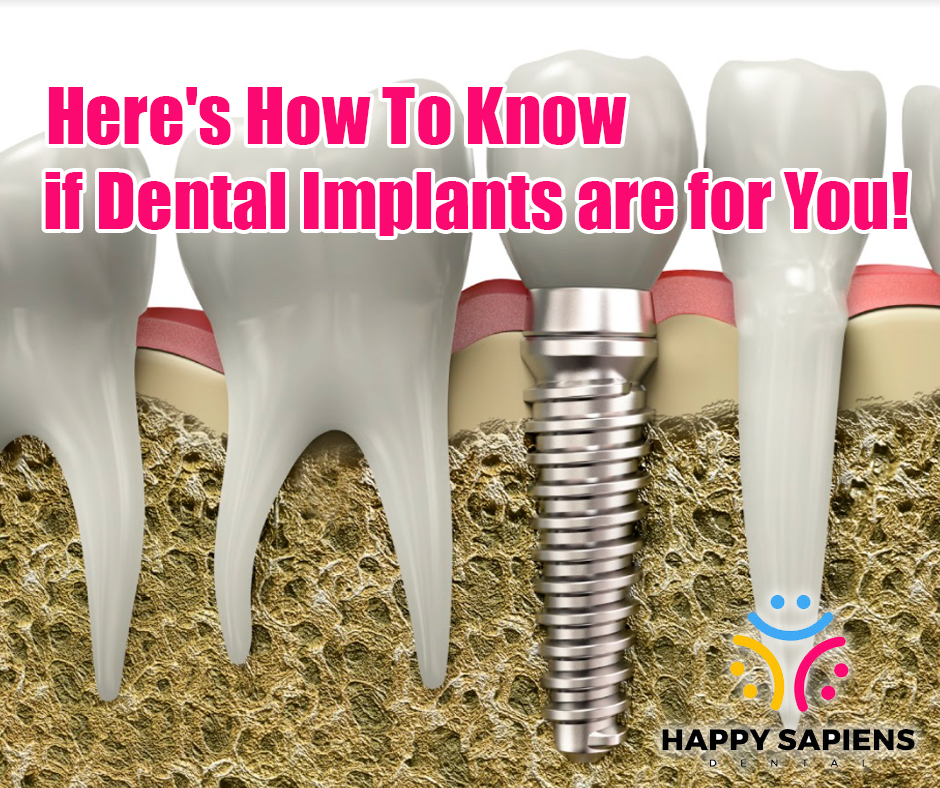
Here’s How To Know if Dental Implants are for You!

For anyone, and you especially, who might be considering having dental implants, you should read the list below and see what your answers are.

  • Do you look in the mirror and see a smile that embarrasses you?
  • Do you have MISSING teeth, FAILING teeth or ill-fitting dentures that just don’t work?
  • Are you tired of social embarrassment, not getting noticed by that special someone or looking older than you are?
  • Do you seriously desire to CHEW COMFORTABLY and knock 10 years off your appearance? (Hint: Many of our patients claim that most people rave about how they look like they’ve lost weight, gotten a haircut, and look 10 years younger as a bonus from their new smile)
  • Do you secretly desire to have a bright, white, healthy smile, preserve your existing teeth, and live a longer, healthier, happier life?

Answer Yes to any of the above and you have to wonder why you’ve not done anything about it yet.

Are your existing dental problems due to putting off dental care because of fear, anxiety, or a busy schedule?

Maybe you’re especially afraid of the dentist because you had a bad dental experience in your past. Or you just don’t think it’s important enough to fit into your busy schedule?

Again, If you’ve answered YES to any one of these questions then I have a free report for you that may just be the most important and emotionally life-changing one you’ve ever read.

Click to receive 9 Critical Secrets to How You Can Turn Back the Hands of Time, Smile Confidently and Chew Comfortably While Eating the Foods You Love

If you have any additional questions, feel free to Call us at (281) 367-3685 in Woodlands , (281) 356-3351 in Pinehurst or CLICK HERE to schedule an appointment.

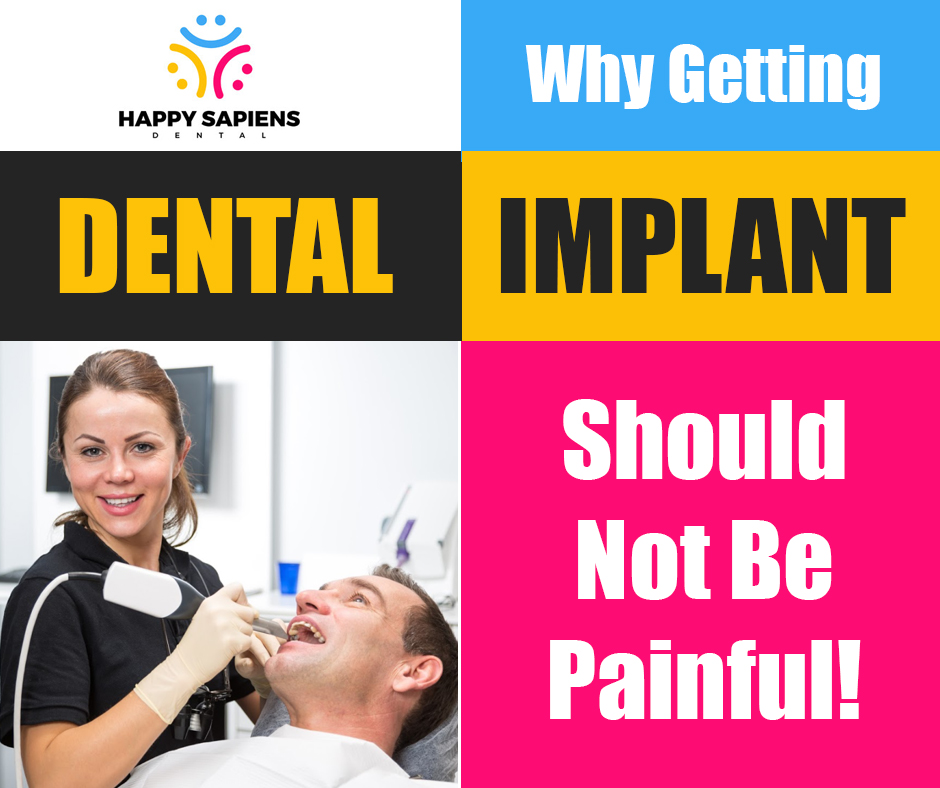
Why Getting Dental Implants Should Not Be Painful!

It’s not uncommon for you to be afraid of any pain. You’re not alone.

Most patients report that they feel very little if any, pain during a dental implant procedure. In fact, many patients say they didn’t even need to use any pain pills. The fact is, your decision to get implants will help you avoid much pain and discomfort in the long term than keeping your bad teeth or not replace missing ones would cause.

Besides, given the overall health care benefits, you should not deny yourself proper treatment out of fear of pain. As with any medical or dental procedure, your dentist, is equipped to provide you with appropriate treatment, including any pain medicines you may need.

During the treatment, you can have movies on a DVD player, music on headphones; you relax in contouring chairs with optional massage pads. In many cases, the hi-tech Electronic Anesthesia and topical numbing preparations applied without needles is sufficient.

Also, if you’re especially fearful, phobic, or pain sensitive, you have the option of doing the procedures with sedation dentistry.

With sedation dentistry, you take a small pill before you come into the office and you rest peacefully as we do our work. With this option you barely remember the procedure the next day but get a lot of dental work done in just 1 visit.

Finally, to make sure you’re comfortable when you leave the office, you’ll get a prescription if necessary. Plus, we will call to make sure that you are not in any abnormal amounts of discomfort. Our goal is to give you stronger, more comfortable teeth, without pain or discomfort!

If you have any additional questions Call us at (281) 367-3685 in Woodlands , (281) 356-3351 in Pinehurst or CLICK HERE to schedule an appointment.

Find an office

LET’S MAKE YOU FEEL AT HOME

Plan your
next visit.

Choose your dental home to start your visit enquiry, or call the office directly.

Continue to visit form

Call (281) 356-3351

Submitting an enquiry does not confirm an appointment. The office will contact you.